
A Conversation with Joe Berlinger, Executive Producer of The Idaho Murders on Netflix
Why He Waited Four Years to Tell This Story

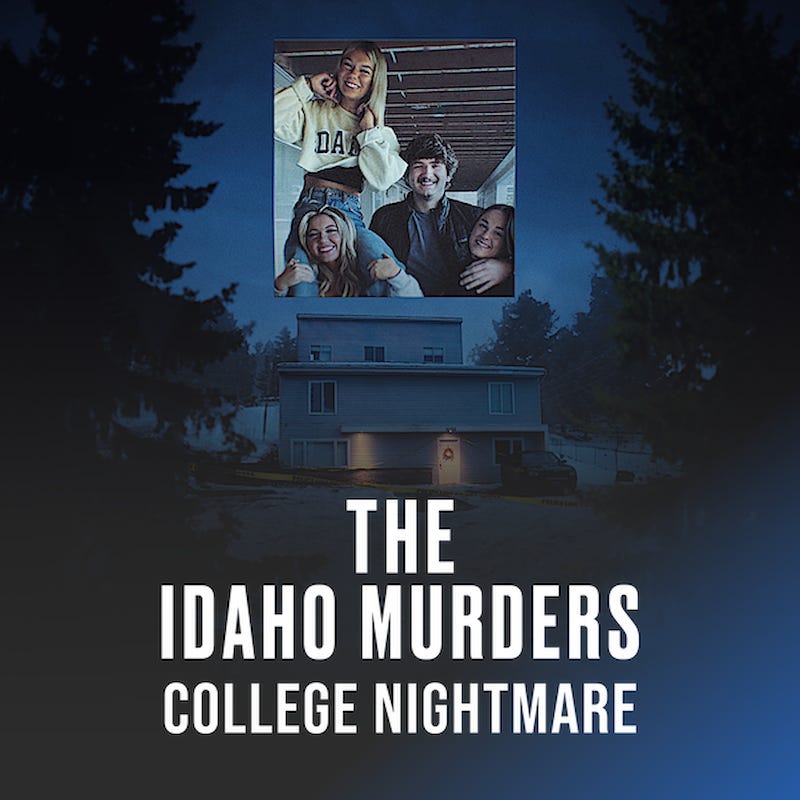
There’s a version of The Idaho Murders: College Nightmare that could have come out in early 2023. The internet, after all, was desperate for it. Reddit sleuths were naming innocent people, TikTok theories were spreading faster than the actual investigation, and every streaming platform wanted to be first.
Joe Berlinger didn’t want to be first, he wanted to be right.
“We took the strategy that the best way to honor the victims is not to rush something out until the story is complete,” Berlinger told me when he joined the podcast this week. His team arrived in Moscow, Idaho within days of the murders in November 2022, but they sat on the story for nearly four years, through Bryan Kohberger’s arrest, his surprise guilty plea, his sentencing, and now his attempt to withdraw that plea entirely.
Berlinger was blunt about it in our conversation: the other Kohberger projects that raced to air did so before the legal proceedings concluded, while gag orders were still in place and investigators legally couldn’t talk. That meant no cooperation from law enforcement, no access to body cam footage, no ring camera evidence — the material that, in Berlinger’s telling, makes College Nightmare the “complete story” rather than another speculative retelling.
Idaho Police Chief Anthony Dahlinger, who Berlinger calls one of the film’s most compelling and sympathetic figures, only agreed to participate once the case was resolved and the gag order lifted.
What struck me most, watching the series and then talking to Berlinger, is how deliberately it avoids the true-crime reflex to sensationalize. He told me he’s uneasy with the “true crime” label itself, despite being one of the genre’s pioneers, he thinks of himself as a social justice filmmaker first. That tension shows up in the choices College Nightmare makes: leaning on real-time archival footage instead of dramatic reenactments, opening with body cam footage that drops you into the moment rather than narrating around it, and — notably — spending real time on who Kaylee Goncalves, Maddie Mogen, Xana Kernodle, and Ethan Chapin actually were, before the case ever became a headline.
We also talked about the surviving roommates’ delayed 911 call, and the intense public criticism they faced for it. Berlinger pointed to something the medical examiner’s timeline makes clear, nothing about calling sooner would have changed the outcome. It’s a detail the show sits with rather than skates past.
I asked Berlinger, after covering serial killers for decades, what set Kohberger apart. His answer surprised me: he doesn’t think Kohberger was driven by the compulsion that defines most serial offenders. He sees a criminology PhD student who studied the “perfect crime” as an intellectual exercise, and, tellingly, doesn’t think he would have killed again. Whether that theory holds up is something viewers will have to sit with themselves.
So — is it worth watching?
I’ve had a lot of you ask me that directly this week, given how many Kohberger projects are now out there. My honest answer: this is the one made by a team that waited for the full picture, got investigators to go on record, and allows you to see inside the house.
You can hear the entire conversation, including the parts about what covering cases like this actually costs the people who make them here.
Bonus episodes are available on Apple Podcasts and Patreon.
Good write up, Kate. The perspective is interesting. I came away from the documentary feeling a little underwhelmed, but perhaps it’s because it wasn’t sensationalized like many crime docs. For some reason the theory of “Kohberger studied criminology and wanted to commit the perfect crime” just doesn’t satisfy my need for theory on motive. I was hoping for more about the suspected stalking of the girls—obviously he chose one or more of them in advance since they’d seen him watching them.